HOW TO TAKE CARE OF YOUR CIRCULATORY SYSTEM?
Now, Circulatory System is our topic today. We can't live without our circulatory system, Why? because our circulatory system circulates the blood that carries oxygen rich to the different parts of our body.
The Circulatory System is responsible for transporting materials throughout the entire body. It transports nutrients, water, and oxygen to your billions of body cells and carries away waste material such as carbon dioxide that body cells produce. It is an amazing highway that travels through your entire body connecting all your body cells.
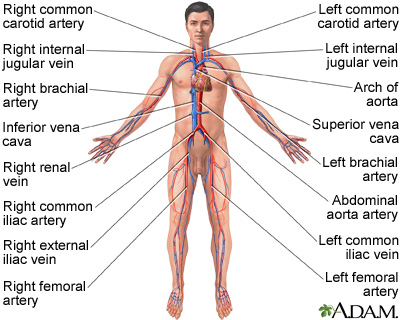
Our Circulatory System is divided into 3 parts.
- Heart
- Blood Vessels
- Blood

Valve is a part of the heart, it is a block of tissue and passage of blood. It prevents blood flowing backward. There are 2 types of valve, Tricuspid Valve and Bicuspid Valve, where tricuspid valve is located at the right atrium and right ventricle and the bicuspid valve is located at the left atrium and left ventricle. Septum, thin wall that separates the right and left side of the heart. Sinoatrial node / Pacemaker is a structure that controls heart rate, located at the wall of Right Atrium.
 Blood Vessels
Blood vessels is a tube where blood flows around the body. There are 3 types of blood vessels, Artery, Veins, and Capillary.
Blood Vessels
Blood vessels is a tube where blood flows around the body. There are 3 types of blood vessels, Artery, Veins, and Capillary.The Artery carry blood away from the heart.It is a thick muscle and elastic fibers. th Veins carry blood towards the heart. It is a thin muscle and elastic fibers. And lastly the Capillary, it link arteries with veins. it is the smallest blood vessel because the wall of it is only one cell thick. Where capillary is the exchange of material.
The Blood
The blood is an amazing substance that is constantly flowing through our bodies.
- Blood Cells
 Red Blood Cells are responsible for carrying oxygen and carbon dioxide because of hemoglobin. Red Blood Cells pick up oxygen in the lungs and transport it to all the body cells. After delivering the oxygen to the cells it gathers up the carbon dioxide(a waste gas produced as our cells are working) and transports carbon dioxide back to the lungs where it is removed from the body when we exhale(breath out).
White Blood Cells (Germinators) help the body fight off germs. White Blood Cells attack and destroy germs when they enter the body. When you have an infection your body will produce more White Blood Cells to help fight an infection. Sometimes our White Blood Cells n
eed a little help and the Doctor will prescribe an antibiotic to help our White Blood Cells fight a large scale infection.
Platelets are blood cells that help stop bleeding. When we cut ourselves we have broken a blood vessel and the blood leaks out. In order to plug up the holes where the blood is leaking from the platelets start to stick to the opening of the damaged blood vessels. As the platelets stick to the opening of the damaged vessel they attract more platelets, fibers and other blood cells to help form a plug to seal the broken blood vessel. When the platelet plug is completely formed the wound stops bleeding. We call our platelet plugs scabs.
Plasma is the liquid part of the blood. Approximately half of your blood is made of plasma. The plasma carries the blood cells and other components throughout the body. Plasma is made in the liver.
Where are the blood cells made?
The Red Blood Cells, White Blood Cells and Platelets are made by the bone marrow. Bone marrow is a soft tissue inside of our bones that produces blood cells.
Heart disease is the leading cause of death. Although there are risk factors that cannot be changed, such as family history, making lifestyle changes can significantly lower your risk of damage to your heart and circulatory system.
Ways to Prevent Diseases in Circulatory System
- QUIT IN SMOKING

Smoking and using cigarette products significantly increases your risk for heart disease. Damage to your heart and circulatory system by the chemical compounds in tobacco can cause atherosclerosis, which may lead to heart attack. Once you quit smoking, your risk of heart disease significantly decreases over the next year. Regardless of how long you have smoked or used other cigarette products, you will notice the benefits of quitting as soon as you do.
- EAT HIGH QUALITY FOODS
 Your food intake can significantly improve the health of your circulatory system and heart. Diets containing five to 10 servings of fruits and vegetables, whole grains and low-fat dairy products are most beneficial to the circulatory system. Avoiding processed foods, foods that are high in saturated and trans fats, and excessive alcohol consumption can also improve your circulatory system health.
- PROPER EXERCISE

- MAINTAIN A HEALTHY WEIGHT
 Managing a healthy weight plays a major role in the health of your circulatory system. Being overweight can increase risk of high blood pressure, diabetes and high cholesterol, all of which put you at increased risk for heart attack and other circulation problems. By just losing 10 percent of your body weight, you can significantly increase the odds of not developing these chronic diseases.

No comments:
Post a Comment