Tuesday, August 12, 2014

HOW TO TAKE CARE OF YOUR RESPIRATORY SYSTEM?


          Lets talk about our respiratory system. All of us know how our respiratory system works. Maybe some does'nt know about it...

Respiratory system is a group of organ working together to bring about the exchange of oxygen and carbon dioxide to the environment. It's organs help us to breathe. It's parts include Nostrils, Trachea, Bronchi, Bronchioles, Lungs, and Alveoli. Where the nostrils bring air, where air is humidified and warmed. The trachea also known as windpipe, allowing the passage of , and so is present in all air-breathing with lungs. The bronchi is a two air tubes that branch off from the trachea and carry atmospheric air directly into the lungs. Bronchioles, is the tertiary bronchus lead into the lungs. The lungs is the main organ of the respiratory system where oxygen is taken into and carbon dioxide is expelled out. Alveoli is a tiny sac-like structure present in the lungs, which the gaseous exchange takes place.
     Medulla Oblongata is the breathing center of the brain.


Now, lets make our respiratory system healthy. how?


  • You can make your respiratory system healthy by not smoking. If your a smoker, STOP it. Why? because in the future of your life you will feel the irritation of your trachea (windpipe) and to your larynx (voice box), Reduced lung function and breathlessness due to swelling and narrowing of the lung airways and excess mucus in the lung passages, Impairment of the lungs’ clearance system, leading to the build-up of poisonous substances, which results in lung irritation and damage, Increased risk of lung infection and symptoms such as coughing and wheezing, and Permanent damage to the air sacs of the lungs. Do you want to have this kind of sickness? if you say YES, you're wasting your money and also your life. SO STOP DOING THIS ACTIVITY!

  • Have an EXERCISE REGULARLY. Working your body for  at least 30 minutes most days of the week (working  hard enough to break a sweat) can help prevent and manage heart disease, high blood pressure, cancer, depression and more.  It also helps to control and manage weight and stress and helps you look and feel better. It also make the heart and lungs stronger. Exercise is the only proven method to add years to your life and life to your years – so get moving today, you’ll be glad you did!


  • EAT A BALANCED DIET. Specially eat rich in nutrients foods to maintain the energy, strength, a healthy immune system and general lung health. I recommend to you eating foods that rich in vitamin's A,C and E and the minerals zinc, potassium, selenium, magnesium and zinc.
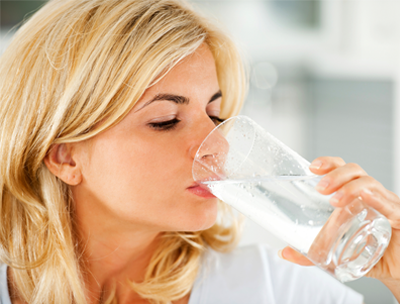

  • DRINK PLENTY OF WATER DAILY to help thin mucus secretions that accumulate in your lungs, facilitating easier breathing. You typically lose about 6.3 cups of fluids daily and drinking at least this much will ensure adequate fluid intake.


  • Add houseplants to your rooms. Indoor plants can improve the quality of the air in your home by removing chemical vapors that can harm respiratory health. It also makes you breathe easier. Put 15 to 18 plants in 6- to 8-inch diameter pots for an 1,800-square-foot house. That’s roughly one larger plant every 100 square feet. Achieve similar results with two smaller plants (4- to 5-inch pots).
  •        Remember that for the best success with any houseplant, you need to match the right plant to the right growing conditions.


  • AVOID STAYING NEAR THE EXHAUST OF THE CAR. Cover your nose with a handkerchief  when you are near the exhaust of the car because it has a chemical that harms your lungs. 


Monday, August 11, 2014

HOW TO TAKE CARE OF YOUR CIRCULATORY SYSTEM?


Now, Circulatory System is our topic today. We can't live without our circulatory system, Why? because our circulatory system circulates the blood that carries oxygen rich to the different parts of our body. 

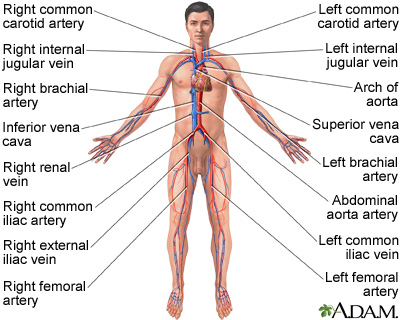
The Circulatory System is responsible for transporting materials throughout the entire body. It transports nutrients, water, and oxygen to your billions of body cells and carries away waste material such as carbon dioxide that body cells produce. It is an amazing highway that travels through your entire body connecting all your body cells.

Our Circulatory System is divided into 3 parts.
  1. Heart
  2. Blood Vessels
  3. Blood
First, lets talk about our heart. Our heart has a job of pumping blood around our body. All of us known where it is located. Our heart has 4 chambers. Right and Left Atria, Right and Left Ventricle. The atria is known as the Receiving / Collecting Chambers, the Right Atrium collects deoxygenated blood, the Left Atrium collects oxygenated blood. It is also called as "double pump", Why? because our heart has 2 pumping sites, the right and left ventricle. Where the Right Ventricle pumps blood through the lungs, and the Left Ventricle pumps blood to our body.
Valve is a part of the heart, it is a block of tissue and passage of blood. It prevents blood flowing backward. There are 2 types of valve, Tricuspid Valve and Bicuspid Valve, where tricuspid valve is located at the right atrium and right ventricle and the bicuspid valve is located at the left atrium and left ventricle. Septum, thin wall that separates the right and left side of the heart. Sinoatrial node / Pacemaker is a structure that controls heart rate, located at the wall of Right Atrium.


Blood Vessels Blood vessels is a tube where blood flows around the body. There are 3 types of blood vessels, Artery, Veins, and Capillary.
The Artery carry blood away from the heart.It is a thick muscle and elastic fibers. th Veins carry blood towards the heart. It is a thin muscle and elastic fibers. And lastly the Capillary, it link arteries with veins. it is the smallest blood vessel because the wall of it is only one cell thick. Where capillary is the exchange of material.

The Blood
The blood is an amazing substance that is constantly flowing through our bodies.
  • Blood Cells
Red Blood Cells are responsible for carrying oxygen and carbon dioxide because of hemoglobin. Red Blood Cells pick up oxygen in the lungs and transport it to all the body cells. After delivering the oxygen to the cells it gathers up the carbon dioxide(a waste gas produced as our cells are working) and transports carbon dioxide back to the lungs where it is removed from the body when we exhale(breath out).

White Blood Cells (Germinators) help the body fight off germs. White Blood Cells attack and destroy germs when they enter the body. When you have an infection your body will produce more White Blood Cells to help fight an infection. Sometimes our White Blood Cells n
eed a little help and the Doctor will prescribe an antibiotic to help our White Blood Cells fight a large scale infection.

Platelets are blood cells that help stop bleeding. When we cut ourselves we have broken a blood vessel and the blood leaks out. In order to plug up the holes where the blood is leaking from the platelets start to stick to the opening of the damaged blood vessels. As the platelets stick to the opening of the damaged vessel they attract more platelets, fibers and other blood cells to help form a plug to seal the broken blood vessel. When the platelet plug is completely formed the wound stops bleeding. We call our platelet plugs scabs.

Plasma is the liquid part of the blood. Approximately half of your blood is made of plasma. The plasma carries the blood cells and other components throughout the body. Plasma is made in the liver.
Where are the blood cells made? The Red Blood Cells, White Blood Cells and Platelets are made by the bone marrow. Bone marrow is a soft tissue inside of our bones that produces blood cells.


Heart disease is the leading cause of death. Although there are risk factors that cannot be changed, such as family history, making lifestyle changes can significantly lower your risk of damage to your heart and circulatory system.

Ways to Prevent Diseases in Circulatory System


  • QUIT IN SMOKING
Smoking and using cigarette products significantly increases your risk for heart disease. Damage to your heart and circulatory system by the chemical compounds in tobacco can cause atherosclerosis, which may lead to heart attack. Once you quit smoking, your risk of heart disease significantly decreases over the next year. Regardless of how long you have smoked or used other cigarette products, you will notice the benefits of quitting as soon as you do.


  • EAT HIGH QUALITY FOODS
Your food intake can significantly improve the health of your circulatory system and heart. Diets containing five to 10 servings of fruits and vegetables, whole grains and low-fat dairy products are most beneficial to the circulatory system. Avoiding processed foods, foods that are high in saturated and trans fats, and excessive alcohol consumption can also improve your circulatory system health.


  • PROPER EXERCISE
Exercise of 30 minutes or more, most days of the week is advised to improve the health of your heart and circulatory system. Physical activity can help manage your weight and reduce your risk of developing other conditions that make your circulatory system work harder, like high blood pressure, diabetes and high cholesterol. Exercise is even effective when broken down into shorter sessions.


  • MAINTAIN A HEALTHY WEIGHT
Managing a healthy weight plays a major role in the health of your circulatory system. Being overweight can increase risk of high blood pressure, diabetes and high cholesterol, all of which put you at increased risk for heart attack and other circulation problems. By just losing 10 percent of your body weight, you can significantly increase the odds of not developing these chronic diseases.

Sunday, August 10, 2014

HEALTH CARE?

          Many people now have the disease. And it is a problem in life of an individual because you will spend money to make the disease cure. A disease is a condition that affects part or all of an organism. It is often construed as a medical condition associated with specific symptoms and signs. It may be caused by factors originally from an external source, such as infectious disease, or it may be caused by internal dysfunctions, such as autoimmune diseases. In humans, "disease" is often used more broadly to refer to any condition that causes pain, dysfunction, distress, social problems, or death to the person afflicted, or similar problems for those in contact with the person.
           In this broader sense, it sometimes includes injuries, disabilities, disorders, syndromes, infections, isolated symptoms, deviant behaviors, and a typical variations of structure and function, while in other contexts and for other purposes these may be considered distinguishable categories. Diseases usually affect people not only physically, but also emotionally, as contracting and living with many diseases can alter one's perspective on life, and one's personality.
Death due to disease is called "death by natural causes". Diseases can also be classified as communicable and non-communicable disease. The deadliest disease in humans is ischemic heart disease (blood flow obstruction), followed by cerebrovascular disease and lower respiratory infections respectively.
          Most people are malnourished. Why? because people who are malnourished are caused by either an inadequate diet or a problem absorbing nutrients from food. There are many reasons why this might happen, including having reduce mobility, a long-term health condition or a low income.